
Delaware’s Renaissance
I have spent more than 28 years in service, from the tank ranges of South Korea to a battle staff in Iraq to the Pentagon’s Chief Digital and AI Office. If those years taught me one thing, it is that prosperity rests on physical things: power, compute, and people who know how to use them.
Delaware has the talent, the location, and the legal foundation to be the Silicon Valley of the East Coast. What we lack is the power, the schools, and the will to build. That can change. I call the path forward the Delaware Renaissance, and the spirit behind it is simple: it’s time for a New Day for Delaware, building for the future while protecting our heritage and our land.
The idea at the heart of it is a virtuous circle. Cheap power brings jobs. Jobs bring higher pay. Higher pay builds stronger schools and stronger families. The agenda has four pillars that reinforce one another: Protect, Power, Educate, and Build. Each one makes the others stronger.
Protect
Nothing gets built on unstable ground. True liberty requires safety, order, and fidelity to the Constitution, so the first job is to protect the security, sovereignty, and rights that everything else depends on.
That starts with safe communities. I want to back the officers who keep our neighborhoods safe while investing in addiction recovery and mental health treatment for the severely addicted. A serious state does both.
It also means protecting what makes Delaware unique. Our corporate franchise and the predictability of the Court of Chancery are why American business calls Delaware home. We should defend it from federal overreach so innovators stay and grow here. I would go a step further with a specialized Chancery docket for AI and technology disputes, open to companies that keep physical compute infrastructure in Delaware.
Sovereignty matters close to home, too. Foreign adversaries should not own farmland near military installations like Dover Air Force Base, and our farmers deserve protection from unfair foreign dumping. I believe in the right of responsible, law-abiding citizens to defend themselves and their families. I believe in protecting life from cradle to grave, with real care and dignity for mothers, the unborn, the sick, and the elderly. And as AI moves into every corner of life, it has to respect the Bill of Rights. Technology should be a tool for liberty, not for control or censorship, and our financial privacy deserves protection.
Power
Everything we want to build runs on electricity, and right now Delawareans pay more for it than the national average. We import most of the power our customers buy, and the electricity we do generate here leans heavily on a single fuel.
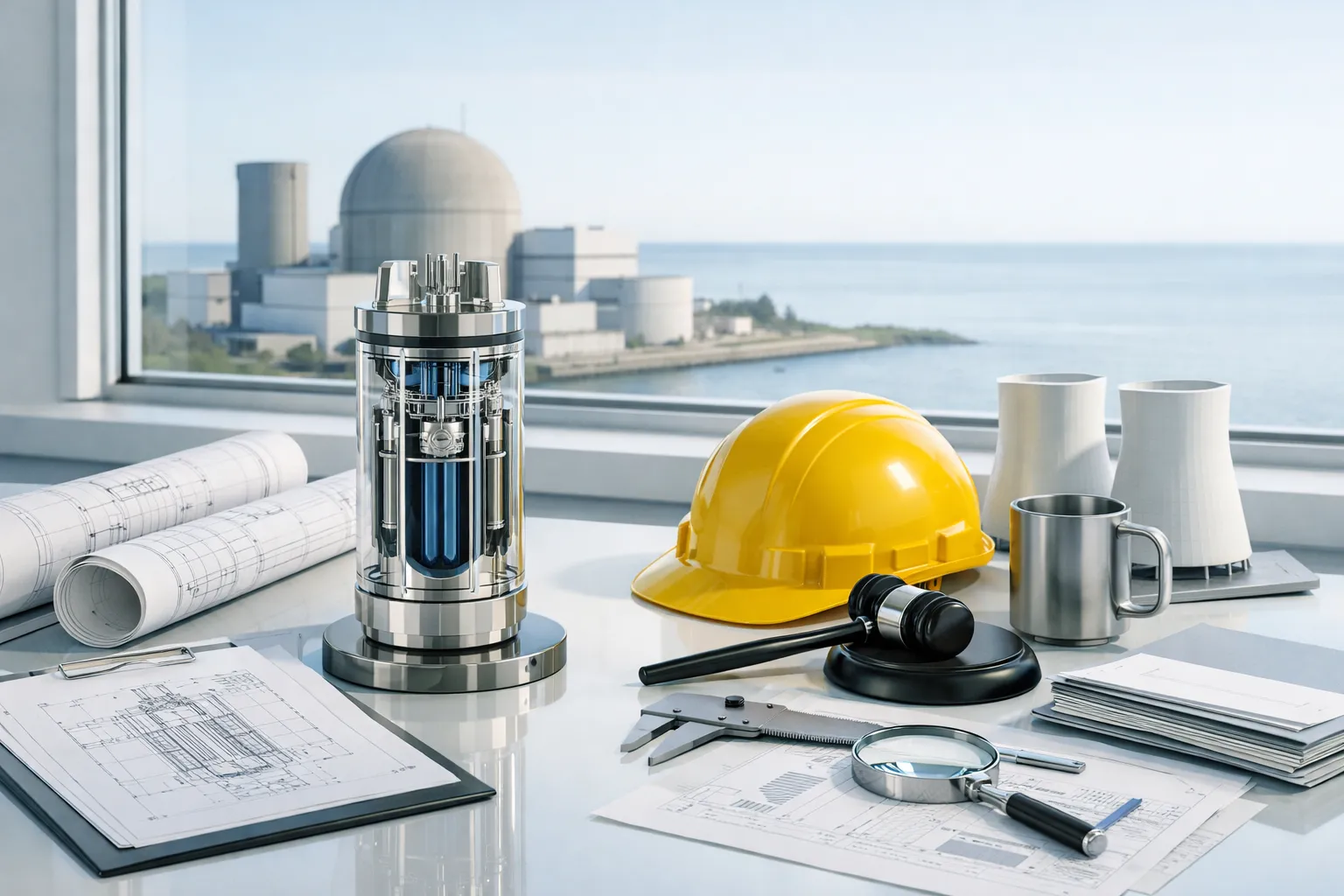
Nuclear power is how Delaware gets to abundance. Factory-built small modular reactors deliver firm, carbon-free power around the clock, sized to what Delaware actually needs. I want to see them deployed at Dover Air Force Base, under a Fortress America approach that strengthens both the grid and our national defense, and at existing brownfield sites across Delaware, where old industrial land already has grid connections and can be put back to productive use. The Indian River site is a natural candidate: it should stay online as a bridge and be developed as a home for new nuclear generation.
The state’s nuclear task force has studied this long enough. As of this fall, there are zero nuclear projects in the regional grid queue for Delaware. We need decisions and a timeline, not another report.
Abundance also means using every electron well. Flexible loads such as Bitcoin mining can soak up surplus power and switch off at peak demand, turning energy that would otherwise go to waste into revenue that helps hold down residential rates. Through all of it, homes and businesses come first. Lower bills for households and employers are the first dividend of energy abundance.
Educate
A Delaware diploma should mean a true 12th-grade education. Today it doesn’t. On the most recent SAT School Day results, 44 percent of our 11th graders were proficient in reading and writing, and just 18 percent in math. My goal is that at least 90 percent of Delaware high school students graduate with 12th-grade proficiency in reading, writing, and math. I believe Delaware can rise from last to first.
The answer isn’t reshuffling districts or changing logistics. It’s fixing incentives and giving teachers, principals, and parents the freedom to choose curriculum that works.
I want our schools to return to the classical foundations of grammar, logic, and rhetoric, and to teach what machines can’t replicate: metaphor, irony, geometry, and polyphony. Students should graduate as architects of AI who command the machines, not passive consumers of screens. And when schools and students build something with public research funding, they should keep the rights to what they create, so our universities become incubators.
AI is the new factory, weapon system, and scientific tool, and Delaware should own its future. That means favoring open-source AI, where people and businesses control their own compute, models, and data. China is leading in open source, and America can’t afford to fall behind. It means right-sized data centers: small, secure facilities that fit our banks, insurers, and other businesses, sized to fit the grid and our water so homes and businesses come first. Oversized centers that strain the grid don’t belong here. And I want secure, private access to advanced AI in every public library, so anyone with a library card can learn, experiment, and start a business without high costs or Big Tech gatekeepers.
Build
We can no longer legislate prosperity without building the physical infrastructure to support it. Our state budget leans heavily on the corporate franchise. Finance and insurance, legal services, and accounting make up about 1 in 8 private jobs, while the business-entity taxes and fees tied to our corporate franchise bring in nearly 30 percent of General Fund revenue. That is a comparison of shares, not a claim that those jobs produce that revenue, but it shows how much of the state budget rides on the franchise and why we need broader growth. My goal is to grow private jobs outside finance and government by 2 percent a year, and to stretch for 3.
We get there by reviving our industrial base. Delaware has a proud legacy in chemical engineering and biotech, and we should build on it by reshoring critical pharmaceutical and defense supply chains. I want a Delaware tech hub, with regional AI hubs in partnership with the University of Delaware that give local startups affordable access to serious compute.
Building also means homes people can afford, which starts with cutting the red tape and permitting delays that drive up construction costs. And our farmers and ranchers should be able to sell directly to customers, lowering meat prices and keeping more value on the farm. The point of all of it is the same: turning ideas into things Delawareans can see and use.
A Contract with Delaware
Across all four pillars runs one aim: an economy of abundance, built on strong families. That means growth that raises wages, property tax relief for homeowners, healthier families through Make America Healthy Again, and self-reliance, building abundance at home instead of waiting on Washington.
I hold this work to clear principles, stated plainly and kept: loyalty, duty, respect, selfless service, and personal courage. That is my contract with Delaware.
This agenda is built on data, not slogans. Every pillar is paired with a measure on the Delaware Dashboard here at shulli.org, drawn from official public sources with their dates. I invite you to visit the dashboard, check where we stand, and help hold the work to account.
Delaware has the talent, the location, and the legal foundation to lead again. Let’s protect what makes it strong, power it with cheap and reliable energy, educate a generation that can reason in an age of machines, and build the things Delawareans can see and use. Mission first, people always.